
| Location | 1-21-18, Shibuya, Shibuya-ku, Tokyo |
|---|---|
| TEL. | (+81)3-3400-6363 |
| Website | https://www.shibushibu.jp/ |
| Membership | 2009 |
2025 Annual Report
Biodiversity, Oceans, Disaster reduction/prevention, Climate change, Energy, Environment, Cultural diversity, World heritage/intangible cultural heritage/regional cultural properties, International understanding, Peace, Human rights, Gender equality, Health, Poverty, Global Citizenship Education (GCED), Other related areas
1. Education Related to Global Citizenship
Grade 10 “Hiroshima Project”:
Based on on-site research conducted in Hiroshima, students worked in teams to create teaching materials that were used as textbooks in world history classes at our partner school, St. Stephen’s Episcopal School in Florida, USA. Ten selected students traveled to the school and conducted world history classes there.
2. Education for the Development of Next-Generation Global Leaders
① Implementation of interdisciplinary active learning classes on global issues
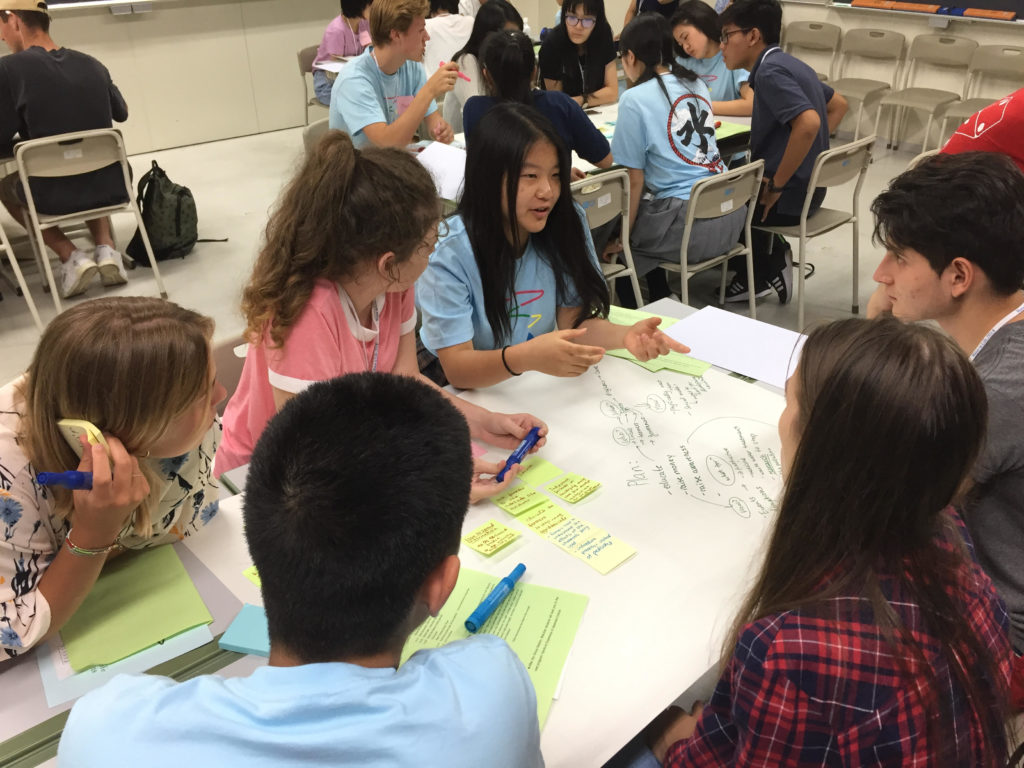
Grade 10 students explored the theme of nuclear weapons in groups and engaged in discussions with graduate students from Asia, South America, the Middle East, Africa, and other regions, which led to student presentations.
Grade 11 students studied topics such as fair trade and Islam from multiple perspectives. Guest speakers from countries including the United States and Pakistan were also invited to share insights into the realities of their respective countries.
② Lectures and workshops for all grades
Experts were invited to conduct lectures and workshops for all students on topics such as microfluidic systems and related fields.
3. Learning Related to World Heritage
In junior high school, students visited Shinshu and Nara, and in senior high school, Hiroshima and Kyushu, to study World Heritage sites and regional heritage in each area.
On site, students worked in teams organized by research theme and conducted interviews and fieldwork. After the study trips, students created presentations and compiled academic papers based on their research findings.
4. Learning Related to Social Participation
Grade 11 “Service Learning”:
Students engaged in social contribution activities aimed at solving real-world problems and expressed their own views. Through gaining firsthand knowledge of social issues, they increased their motivation to bring about social change.
Activities included, for example, organizing blood donation events at Shibuya Cast and hosting workshops to promote food education for kindergarten children, among many other initiatives.
5. Network Building Toward the Achievement of the SDGs
The “Learning Olympiad SOLA 2025” (Shibuya Olympiad in Liberal Arts 2025) was held both online and in person. Students were responsible for everything from planning to implementation.
A total of 18 programs were organized, including a mock G7 Summit envisioning Japan in 2050, a mock National Diet, workshops on plastic waste reuse, and SDGs-themed parody songs.
The event brought together 493 participants from 55 schools in Japan and 38 schools across 8 countries. Support was provided by 13 organizations, and cooperation was received from 30 guest speakers from Japan and abroad, successfully building networks beyond the school community.
Annual Work Plan
1. Education Related to Global Citizenship
① Students stay in the dormitories of top schools in Singapore and hold conferences on the SDGs. In addition, overseas study programs are conducted in countries such as the United States, Australia, India, Vietnam, and China, where students interact with local university students as well as junior and senior high school students. ②Multiple long-term international students are accepted, and many opportunities are provided for cultural exchange and cultural presentations.
2. Education Related to the Development of Global Leaders
Through cross-curricular active learning classes on issues facing global society, students deepen their understanding via off-campus training and discussions with graduate students, and conclude the program by giving presentations.
3. Education Related to World Heritage
Training programs focusing on World Heritage sites are conducted to deepen understanding of the significance of preserving them and the efforts required to do so. Students also deepen their understanding of UNESCO activities and recognize the importance of being members of a UNESCO School.
4. Learning Related to Social Participation
① Students individually consider what they can do now to help solve issues facing the local community, take action, and share their learning through social contribution activities.
② Hosting of SOLA 2026.