

| Location | 1-51-12, Takinogawa, Kita-ku, Tokyo |
|---|---|
| TEL. | (+81)3-3910-6161 |
| Website | https://sakuragaoka.ac.jp/ |
| Membership | 2017 |
2025 Annual Report
Disaster reduction/prevention, Environment, International understanding, Peace, Human rights, Sustainable production and consumption
Our school upholds “Diligence and Creativity” as its guiding educational philosophy and positions ESD (Education for Sustainable Development) as a concrete framework for action. Through the practice of ESD, we aim to nurture individuals who can achieve both personal fulfillment and meaningful contributions to society. With international understanding, the environment, and peace as our core pillars, we have implemented the following educational activities.
1.Activities Related to Various Training Programs
We promote initiatives based on UNESCO principles through training programs tailored to each grade level and academic course.
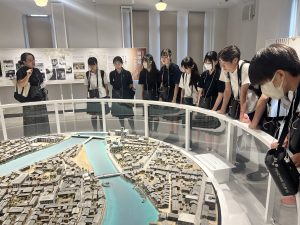
At the junior high school level, students deepened their understanding of the value of peace and the nature of a sustainable society through activities such as the Hiroshima Peace Study Program and the Kagoshima Inquiry-Based Training Program, thereby fostering a foundation for international understanding.
At the senior high school level, students participated in training programs in Hokkaido and the Tohoku region, where they learned experientially about regional history and culture while engaging in studies rooted in real-world issues such as disaster prevention and mitigation, as well as regional recovery.
In addition, through programs such as the Cebu Island Study Tour, training programs in Australia, sister-school exchanges with the United States, and short-term study abroad programs in Canada, students deepened their understanding of global issues, including poverty and environmental challenges, through direct interaction with local communities, and cultivated an attitude of respect for diverse values.
2.Activities Related to International Understanding
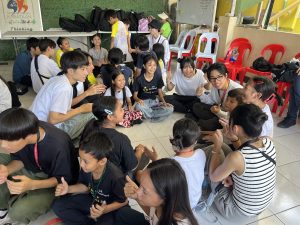
Through exchanges with schools in countries such as the United States, Australia, and the Philippines, students engaged in school visits and joint classes. In these activities, students examined familiar issues they personally face, such as social media use, environmental problems, and human relationships, and explored concrete actions and their own roles in addressing these challenges.
Furthermore, through global career lectures by internationally active professionals and workshops conducted by NPOs supporting developing countries, students heightened their awareness of global issues and deepened their reflections on their future paths and careers as members of the global community.
3.Learning Related to Peace and the Environment
At the junior high school level, students engaged in inquiry-based learning on themes such as “What is peace?” and “What does it mean to be global?”, fostering the ability to view global challenges as their own and to address them proactively.
At the senior high school level, students participated in ESD-oriented courses such as Inquiry Seminars, Regional Revitalization Projects, and Global Issues. Through these programs, they deepened their understanding of and respect for international peace and diverse cultures, while developing the capacity to take action toward the realization of a sustainable society.
In addition, through classes conducted by the Japan Association for UNHCR and participation in UNIQLO’s Clothes for Smiles Project, students deepened their understanding of refugee issues.
4.Volunteer Activities
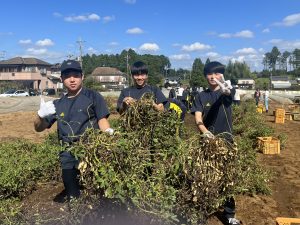
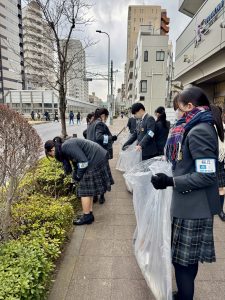
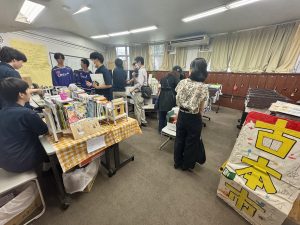
Led primarily by the UNESCO School Committee, students have continued a wide range of volunteer activities, including the collection of plastic bottle caps and empty disposable contact lens cases, as well as an on-campus used book fair to support disaster-affected areas. Students have also addressed environmental issues close to home through activities such as cleaning areas around the school and tackling food loss related to school lunches.
Through these experiences, students have come to recognize that individual actions can contribute to society, thereby strengthening their motivation to engage proactively with their communities.
In the coming academic year, we will continue and further develop initiatives based on UNESCO principles through training programs, sister-school exchanges, inquiry-based learning, and volunteer activities. Our goal is to cultivate the ability to perceive global issues as personal concerns, think independently, and translate ideas into action.
Annual Work Plan
1.Training Programs and Exchanges with Overseas High Schools
We will continue training programs tailored to each grade level and course, promoting the development of human qualities through the practical application of the SDGs. Through exchanges with overseas schools, students will deepen their international understanding. In addition, during the Tohoku training program, students will study disaster prevention and mitigation as well as the importance of life from multiple perspectives, connecting their learning to future actions.
2.Sign Language Workshops and Moral Education Plays
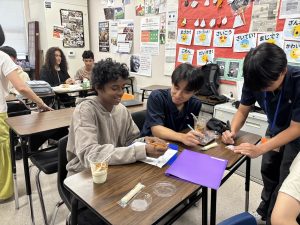
In the first year of junior high school, students will have ongoing opportunities to interact with people with disabilities, learning about the importance of welfare in a coexisting society. In the third year of junior high school, students will create moral education plays, encouraging deep reflection on ethical behavior and enhancing expressive skills through performance.
3.Volunteer Activities
We will continue activities such as the on-campus used book fair, recycling initiatives, and the Clothes for Smiles Project, fostering the perspective that each individual’s small actions can contribute to solving social issues. We also aim to strengthen collaborative activities through exchanges with other UNESCO Associated Schools.
4.Inquiry-Based Learning and Initiatives Related to International Days
We will continue ESD-oriented inquiry-based learning to promote education that nurtures creators of a sustainable society. In addition, we will incorporate initiatives related to international days into classes and extracurricular activities to deepen students’ understanding of global challenges and diverse values.
5.Establishment of a New Course (Senior High School)
Starting next academic year, we will introduce a new International Liberal Arts Course. Centered on learning that considers global affairs and cultural diversity, the course will cultivate a glocal perspective. Through overseas training programs and inquiry-based learning, we aim to develop leadership skills that enable students to respond flexibly to a rapidly changing society.